
How to Search the State Line City Court Docket
Begin with Indiana MyCase and pick Warren County from the list. No State Line City court exists to select. The fastest route is an exact case or citation number. For a name search, start with the last name. Add the first name, case category, or filing dates only when the results need narrowing. Be careful with birth date filters. A missing value in the record can hide a case that is really there.
Before opening the CCS, glance at the court, case type, filing date, status, and party role to confirm the match. Then read the later docket entries for continuances, amended charges, orders, dismissal, judgment, or appeal.
- Identify whether the record is court, town, police, BMV, or federal.
- For an Indiana trial case, search MyCase with Warren County selected.
- Use the exact case number or the narrowest sound name search.
- Check Court Calendar or PAY only for their separate purposes.
- Contact the Warren Clerk when online information is incomplete.
State Line City Court Name Trap
The word "City" simply belongs to the place name. It creates no municipal court. The official State Line City page describes the incorporated town and its civic schedule.
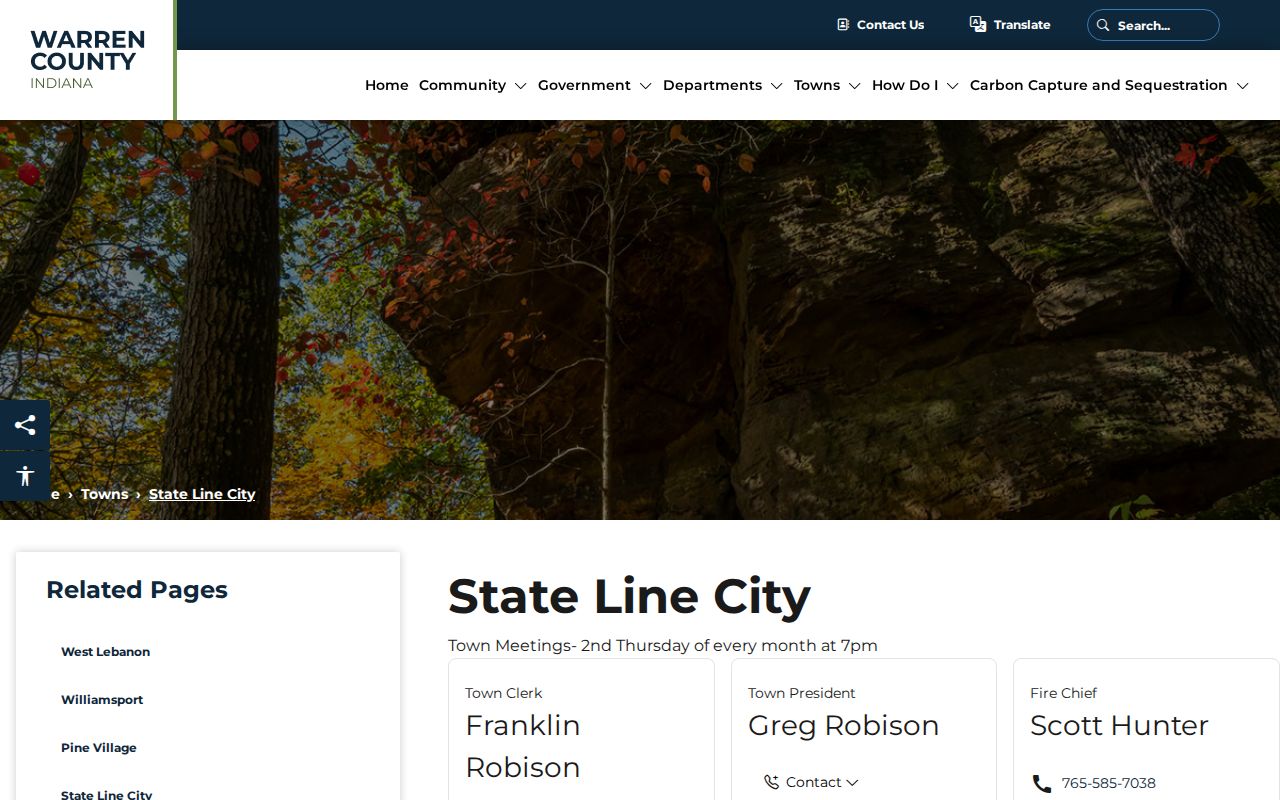
Town sources cover meetings. Case dockets answer to Warren Circuit Court and the Indiana Judiciary. That split guards against two mistakes. A name alone does not conjure a State Line City tribunal into existence, and a town meeting notice is never a court date. Official Warren local rules list one county court.
The State Line City Municipal Court
Warren County operates no State Line City Municipal Court and offers no municipal docket portal. Warren Circuit Court is the county's only trial court. Its Clerk holds the county trial records and serves as the local access point for inspection, copies, certification, filing questions, and current balances.
MyCase gives public case summaries. Court Calendar posts qualifying public hearing schedules. PAY handles eligible traffic lookup and payment. Each tool does one job, and none of them backs the idea that State Line City runs its own court. Keep every search anchored to Warren County and the case type you know.
Plain answer: State Line City has “City” in its name, but its local Indiana trial-court starting point is Warren Circuit Court.
State Line City Record Source Map
What a record is about does not tell you where it lives. One traffic stop can leave behind a police record, a court citation case, and a BMV record. Three different offices keep them. A federal filing sits with another clerk and docket entirely. Town-board minutes stay with State Line City government.
| Record sought | Starting source | Maintaining office |
|---|---|---|
| Indiana trial case | MyCase | Warren County Clerk |
| Public court setting | Court Calendar | Warren Circuit Court |
| Driver record | Indiana BMV | BMV |
| Federal case | PACER | Federal clerk |
| Town meeting record | Town office | State Line City |
Pick the right source first. It saves time and shields you from false matches with similarly named places.
State Line City Court Dates and Settings
Open Indiana Court Calendar and set the county to Warren. The court filter, if you use it, should be Warren Circuit Court. Pick a date within the allowed window. It spans the prior seven days and the next four weeks. Then narrow the results by case name or number. Confidential cases, special-judge matters, and administrative settings may not appear.
A hearing near State Line City can always move. Check the latest notice and the CCS before you go, and call the court if the time or place looks wrong. A listing is not proof anyone appeared. It is also not proof that an order was entered.
| Date | The public session date displayed in the calendar window. |
|---|---|
| Time | Scheduled start and end values. |
| Courtroom | The location attached to Warren Circuit Court. |
| Judge | The listed judicial officer. |
| Setting Type | The hearing description, not the outcome. |
State Line City Court Calendar Difference
The official town page lists State Line City meetings on the second Thursday of each month at 7:00 p.m. That is a civic schedule, not a Warren Circuit Court date. Real court settings come from a court notice, Indiana Court Calendar, or direct confirmation from the court.
The difference goes beyond wording. Town minutes record local government action. A CCS tracks case activity. A hearing calendar forecasts public judicial sessions. A final order captures a court's decision. None of these date sources can substitute for another.
Date check: Confirm the issuing body, case number, court, and setting type before traveling or treating a listed date as a legal deadline.
State Line City Traffic Tickets
Indiana PAY is the tool for an eligible ticket. You can search by UTT number, driver's-license number, or name with date of birth. Allow ten business days for a new citation to show up. The site may display your balance and transaction cost. It may also show ticket-copy availability and possible plea or deferral options.
PAY does not hold driver records. MyCase is a separate public case-summary interface. The Indiana BMV keeps driving records. Before paying or contesting, confirm the deadline and your options with the court. A payment receipt is not a certified disposition. The full county process is laid out in Warren County traffic court records.
State Line City Docket Privacy
The 2020 incorporated-place table counted 120 people in State Line City. It ranked fourth of Warren County's four incorporated towns. That number is a census count. It is not a current estimate or a gauge of docket activity. In a town this size, it mainly argues for handling sources with care.
You do not need a private name to explain MyCase. Field labels and a case-number format like 86C01-YYMM-TYPE-SEQUENCE show Warren's county code. Neither poses as a live case. A small-place search should never expose a resident just to demonstrate an interface.
Where State Line City Cases End Up
A State Line City trial matter files in Warren Circuit Court. This applies when that court has jurisdiction. An appeal opens a separate appellate docket at the state level. Federal claims and bankruptcy cases use a federal docket instead. They never surface in a Warren County MyCase result. The agency record behind the case may sit somewhere else again.
Docket flow: State Line City matter › Warren Circuit Court › Indiana appellate court, when appealed
Think record type first, then jurisdiction. The Warren Clerk keeps county trial files, while federal court clerks run their own separate systems. A search result that mentions the town means little; the court that holds the file decides where you look.
State Line City Bankruptcy Docket Boundary
The Northern District Bankruptcy Court composition describes federal bankruptcy coverage.
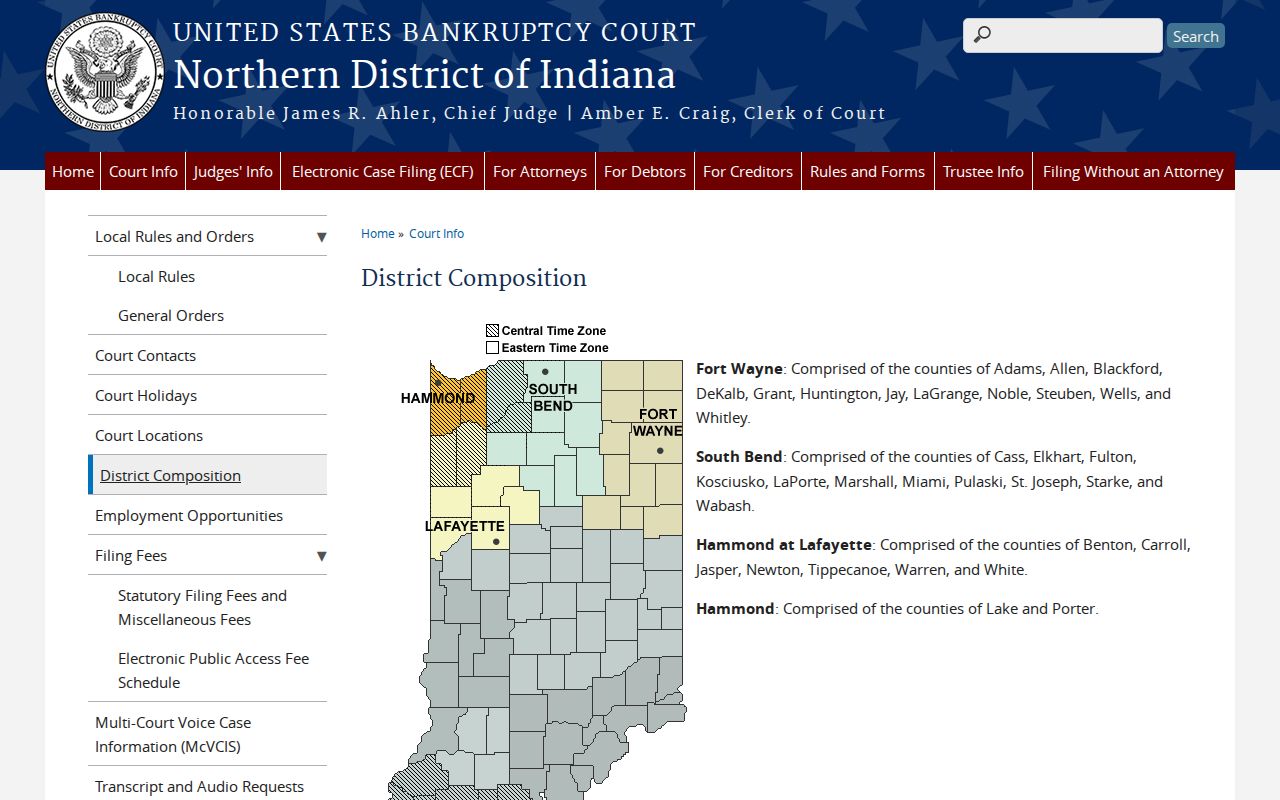
A bankruptcy docket never shows up in Warren Circuit Court, even when a State Line City resident or address is part of the case. The federal system is its own world. Searches there run through PACER and federal CM/ECF records, never a municipal docket. Filing questions, fees, credentials, and document access all answer to federal rules. When in doubt, contact the appropriate bankruptcy clerk.
Public Access to State Line City Court Records
Indiana court records stay open unless a rule, statute, or court order carves them out. Online access is only one channel, though. A case may lack a MyCase document link. It can still be viewable at the courthouse or through a Clerk copy. Categories such as juvenile, sealed, expunged, protection-order, mental-health, medical, treatment, supervision, and protected personal data can carry limits. The Warren County Clerk sits at 125 North Monroe Street, Suite 11, Williamsport, Indiana 47993. The state directory lists 765-762-3510. Bring the case number and the record you want. Note the date range, and whether you need an ordinary or certified copy.
Key Rules:
Indiana Rules on Access to Court Records establish the general access framework.
Access Rule 5 identifies confidential records and protected information.
Administrative Rule 9 separates remote, courthouse, calendar, and bulk access.
State Line City Federal Docket Check
The federal bankruptcy court's ECF and PACER questions lay out how filing and public case access relate.
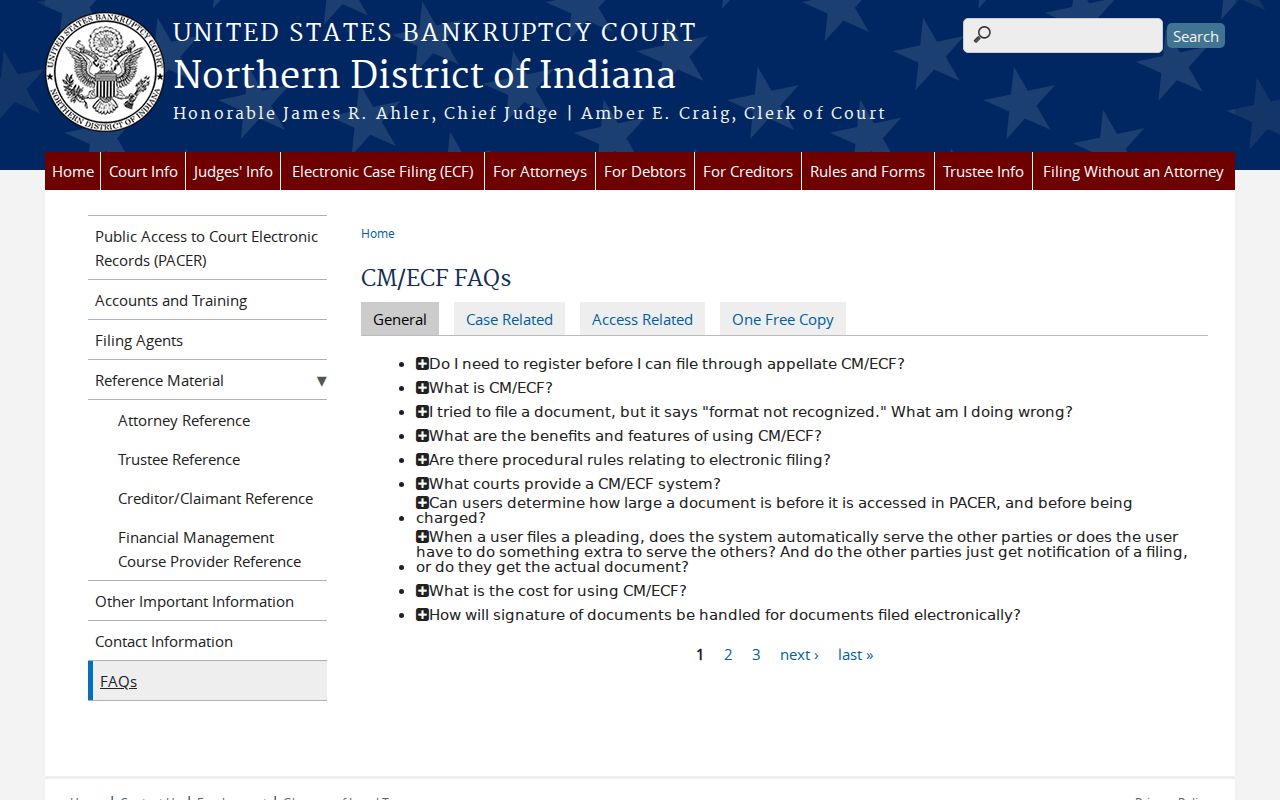
The split is clean. ECF handles federal electronic filing, PACER handles federal public access, and MyCase covers Indiana state trial cases. A town near a state line does not make a case federal. Jurisdiction turns on the case, not the town's name. Check the court printed on the notice or filing. If it says Warren Circuit Court, use MyCase and the Warren Clerk; if it names a federal court, use that court and PACER.
State Line City Court Copy Request
Call before driving to Williamsport. Have the case number ready. Also bring the exact filing if known, an approximate date, and the format you want. Say whether you need inspection, an ordinary copy, certification, a transcript, or audio. Ask whether the record is public. Ask too if it is held at the courthouse, subject to redaction, or kept elsewhere. Statewide references list $1 per page for a document copy. They list $1 for a seal certificate and $3 for a judgment transcript, with other fees possible. Online financial screens can miss recent transactions or adjustments. Let the Clerk confirm a current balance and final cost.
State Line City Docket Terms
The CCS is a chronological summary. It is not a transcript or a guaranteed set of document images. A "filed" item marks a submission, not a ruling. A "setting" is a scheduled event, and "continued" means that event moved. "Closed" is only a status; later payment, appeal, or enforcement activity can still matter. Read the whole visible sequence. Draw no conclusion from a single State Line City entry.
- Case type
- The category that helps identify the kind of Warren Circuit Court matter.
- Order
- A judicial direction; the CCS reference may not include the full text.
- Converted event
- An older entry migrated from another system, sometimes without an attachment.
- Certified copy
- A record authenticated by the maintaining Clerk.
Unclear about a term? Ask for the public document behind the entry. Clerk staff explain access and copy mechanics, but they will not interpret an order or advise you what to do. For a disputed deadline or hearing, trust the filed notice and direct confirmation from the court over any stale search snapshot.