
The Warren County Court Calendar
Indiana Court Calendar lists public trial-court hearings covering the past seven days and the next four weeks. Pick Warren County. Narrow the list as needed. Add Warren Circuit Court, a date, a case number, or a case name. State and local rules name Warren Circuit Court as the only local court. Keep perspective on what this schedule is. It is not the official case record. Confidential matters, special-judge cases, and administrative settings may not appear, and the local court warns that the calendar says nothing about judge availability. A row can shift, cancel, or refresh without much fuss. Treat it as a way to spot a setting. Then confirm anything that touches travel, an appearance, service, or a deadline. No separate Warren superior, city, or town court exists. The official directory lists just one. Every county trial setting flows through that single Circuit Court choice. The court filter is easy. The case type still matters, though. Civil motions, criminal hearings, family sessions, probate matters, and jury settings each carry their own notices and procedures. Tie a Warren County docket search to the named case, the date, and the hearing description. Do not assume one day's matters all follow the same call. If the online row and a filed notice disagree, call the court before relying on either.
Warren Calendar Search Window
The search window is tight on purpose. A date must sit between seven days back and four weeks ahead. A hearing outside that span can still exist. The tool will not let you select it yet. Results may also cap at 100 hearings. The court, date, case number, and case-name filters earn their keep. The official Court Calendar page shows the full search layout and current settings.
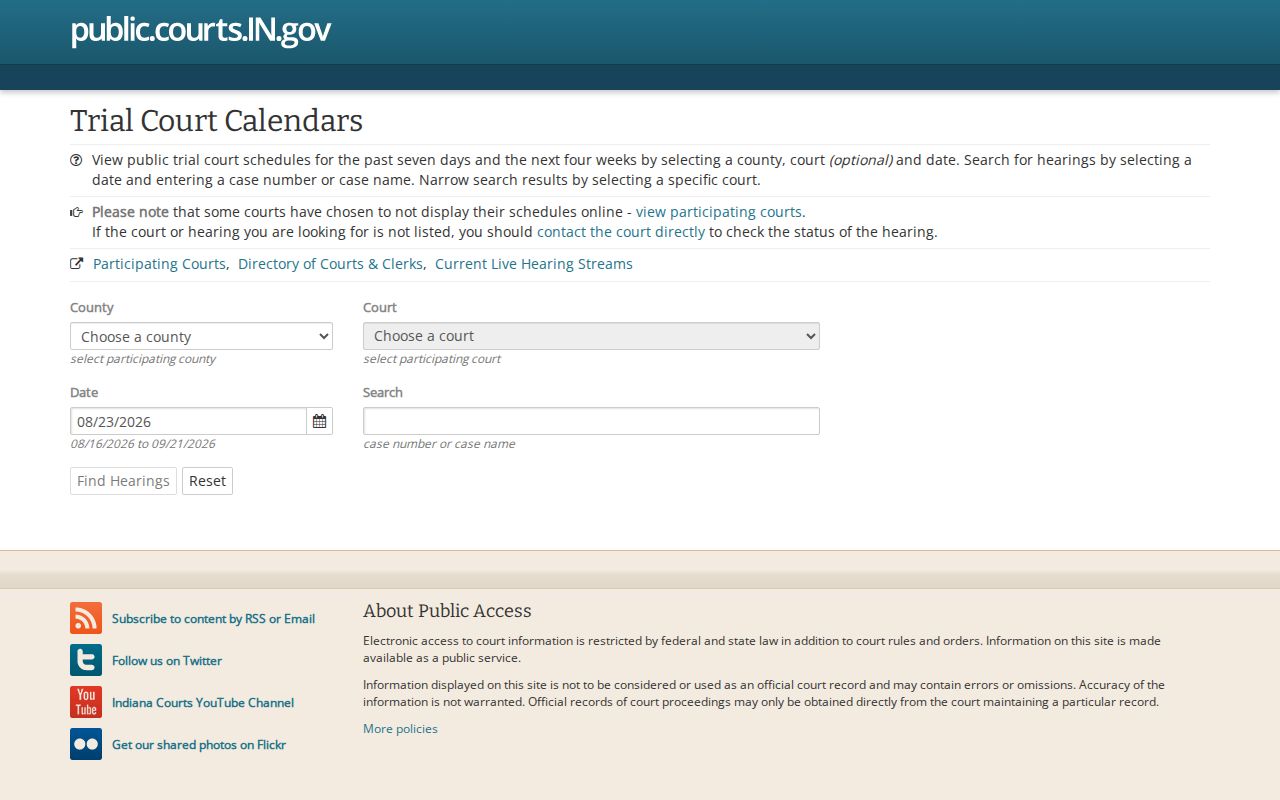
A saved image is only a snapshot. Later court action can move a setting, so recheck the live Court Calendar before you plan around any date.
7 daysPast schedule visible
4 weeksFuture schedule visible
100Possible result limit
How to Find Your Court Date
Begin with the most exact identifier you have. A case number beats a name when two parties sound alike. Use both official online tools when needed: Court Calendar tells you when a public hearing is planned, while MyCase supplies the CCS and the wider case history.
- Open Indiana Court Calendar and choose Warren County.
- Select Warren Circuit Court and the relevant date.
- Add the case number or case name to narrow results.
- Open MyCase and check the newest CCS setting.
- Call Warren Circuit Court or the Clerk if the hearing is absent or unclear.
- Confirm in person at the Clerk counter or courthouse posting when appropriate.
- Check the notice from counsel and ask the attorney of record about changes.
A mailed or filed hearing notice still matters. Beyond courthouse access, the county prints no general daily calendar, and E-notify is a convenience rather than official notice. If a hearing is missing, the local instructions say to contact the court.
Warren E-Notify Is a Convenience
The Warren court site offers an E-notify entry point for case updates. It can help a participant follow activity in a case. But it replaces nothing: not an order, not a notice, not docket review, and not direct confirmation from the court. Contact details and delivery systems can fail. The duty to check the case stays with you. The official county E-notify source appears below.
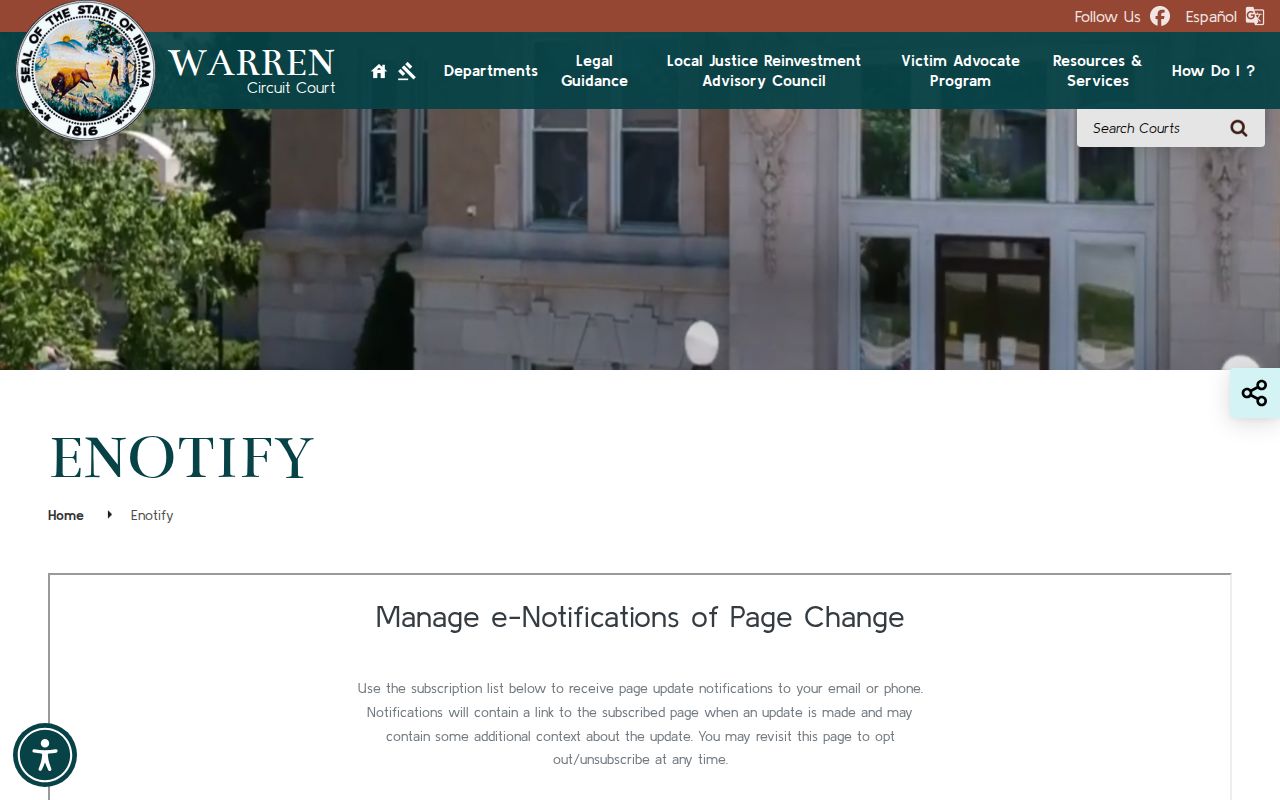
Treat any alert as a nudge, not an answer. Verify the date, start time, location, hearing description, and the latest CCS entry yourself.
Reading a Court Setting
A Warren County court calendar result can carry several fields. They only make sense as a set. A start time alone will not tell you whether the event is motion hour, a conference, a trial, or another session. The hearing description fills that gap. Note the refresh field too. It shows when calendar data was last supplied, not when a court order was issued.
| Date | The scheduled session date within the calendar's visible window. |
|---|---|
| Time | Start and end time, which may differ from an individual appearance time. |
| Courtroom | The listed location; confirm changes with Warren Circuit Court. |
| Judge | The presiding judge shown for the public setting when available. |
| Setting Type | The hearing description, such as motion, conference, hearing, or trial. |
| Refresh | An indicator of when the public calendar data was updated. |
The Court Calendar may also show the court, county, and time zone, though not every row carries every field.
Warren Motion Hour and Thursday
Warren local rules set motion hour daily from 8:15 to 9:00 a.m. when court is in session. Thursdays are excluded. That schedule is why many short matters bunch into the morning. A self-represented conference may run through Zoom, become part of the court record, and generally stay under 15 minutes. Motion hour is not permission to show up unannounced or to assume a particular motion is set. Check the case's CCS and the hearing notice first. Under the local rules, proposed orders must be submitted separately with a motion. A failure can bring denial or striking. Those filing rules shape the case trail. They do not by themselves place a matter on the public calendar.
- Motion hour
- A local short-setting period, except Thursday.
- Session
- A scheduled block in which one or more matters may be heard.
- Hearing description
- The public label for the planned proceeding.
- Refresh date
- The calendar-data update marker, not an outcome date.
Resets, Continuances, and Cancellations
A reset pushes a hearing to another day. A continuance does the same by court order. A cancellation wipes the event off the schedule entirely. None of these can be read out of an old calendar image. Later CCS entries will show a new date or a signed order. Watch those. Then check the live Warren County calendar. The row can shift again once court staff update the scheduling data.
Only the judge can grant a continuance. A request proves nothing. Nor does a motion or a message to staff. The setting may not have moved at all. Keep honoring the notice you already have until the court issues and records a change. Unclear about the new time or place? Call Warren Circuit Court or the Clerk with the exact case number and hearing date.
Save the source date with any calendar information you keep. Compare descriptions as well as dates, because the kind of setting can change too. If MyCase shows a continuance but no new session yet, guess nothing. Staff can tell you whether another notice or scheduling order is on the way. A hunch never has to stand in for the court's word.
Remote Warren Hearings
A remote appearance needs the judge's permission first. Warren's own guidance treats Zoom as generally inappropriate for testimony, evidence, trials, or contested matters. A calendar entry grants no authority to appear remotely, to photograph, or to record, and the courtroom's device and recording limits still apply. The official remote-hearing information page has the details.
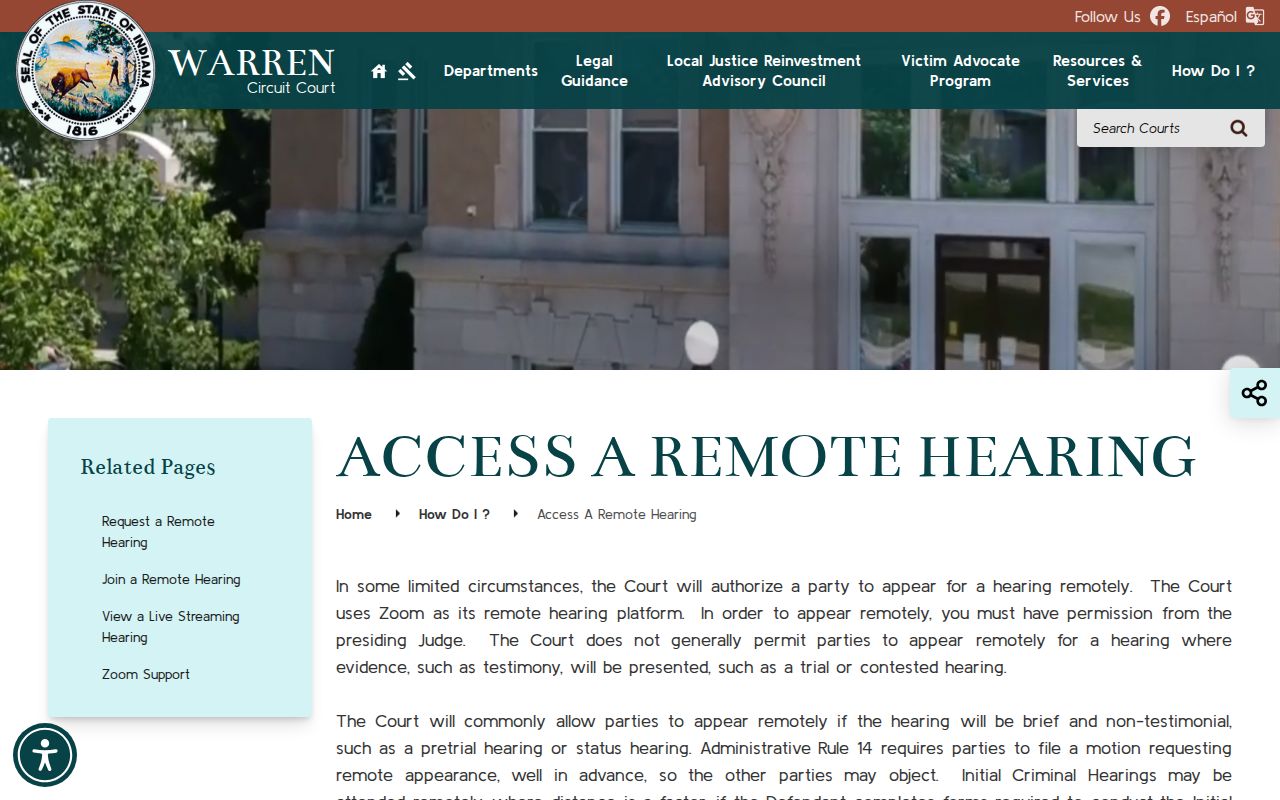
The court may stream a remote-only public hearing when it provides access. Proceedings that involve confidential content may not be publicly available.
Requesting a Warren Remote Setting
Want to appear remotely in a Warren County case? Follow the court's request process instead of trusting a calendar label. Warren asks for a written motion, notice to the other parties, and a filing at least one business day before the hearing, with the decision left to the court and its stated exceptions. The official remote-hearing request instructions page spells out each step.
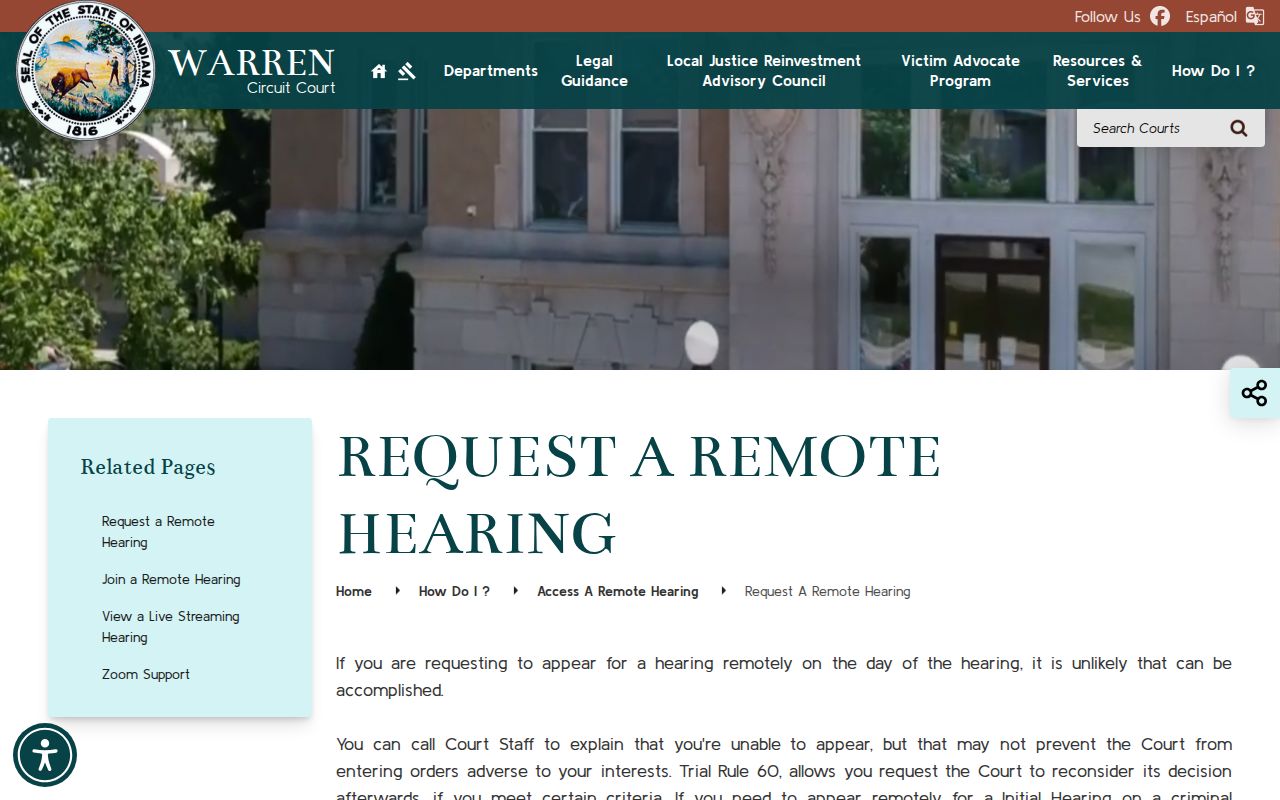
Filing the motion does not win it. Check the docket for an order and confirm how to join before treating the appearance as remote.
What To Do If You Miss a Setting
Call the Warren Circuit Court, the Clerk, and your attorney of record right away. Give them the case number. Add the scheduled date and the type of hearing. MyCase may show a later order or a reset, so check it. A missing calendar row does not mean the court took no action.
Missed a Warren setting? A missed date can lead to orders, default, dismissal, a failure-to-appear finding, warrant action, or other case-specific consequences.
Ask the court or counsel what was entered and what lawful step is available now.
Legal advice about a missed setting should come from a licensed attorney familiar with the case.
A public calendar shows scheduling. It does not show the judge's response to nonappearance. The real answer sits in the court record and any signed order.
Write down whom you contacted and when. Note which official source you checked. In a civil matter, the next record may address default, dismissal, or a new setting, while a criminal or citation matter can carry more urgent consequences after a missed court date. The docket shows the procedural event court staff entered, not a stale calendar capture. Get the order itself when its terms control the next step.